Dogs are wonderful at many things. Keeping the house clean is not usually one of them. Between muddy paw prints, nose smudges, shedding fur, mysterious carpet stains, and the occasional pet accident, maintaining a clean home with a dog can feel like a full-time job.
The good news is that you do not have to choose between a clean house and healthy pets. You also do not need to panic over every bottle beneath your kitchen sink. Dog-safe cleaning is mostly about knowing which harmful ingredients to watch for, choosing pet-safe cleaning products when possible, and using common household cleaners correctly.
In this guide, we will look at ingredients that may cause skin irritation, gastrointestinal upset, breathing problems, or more serious reactions. We will also cover dog-friendlier brands and products for your floors, carpets, laundry, fabrics, and everyday household messes.
The goal is not to make you afraid to clean around your furry friend. It is to help you read a product label with confidence, make practical choices, and keep both your home and your four-legged cleaning supervisor safe.
What Makes a Cleaning Product Unsafe for Dogs?
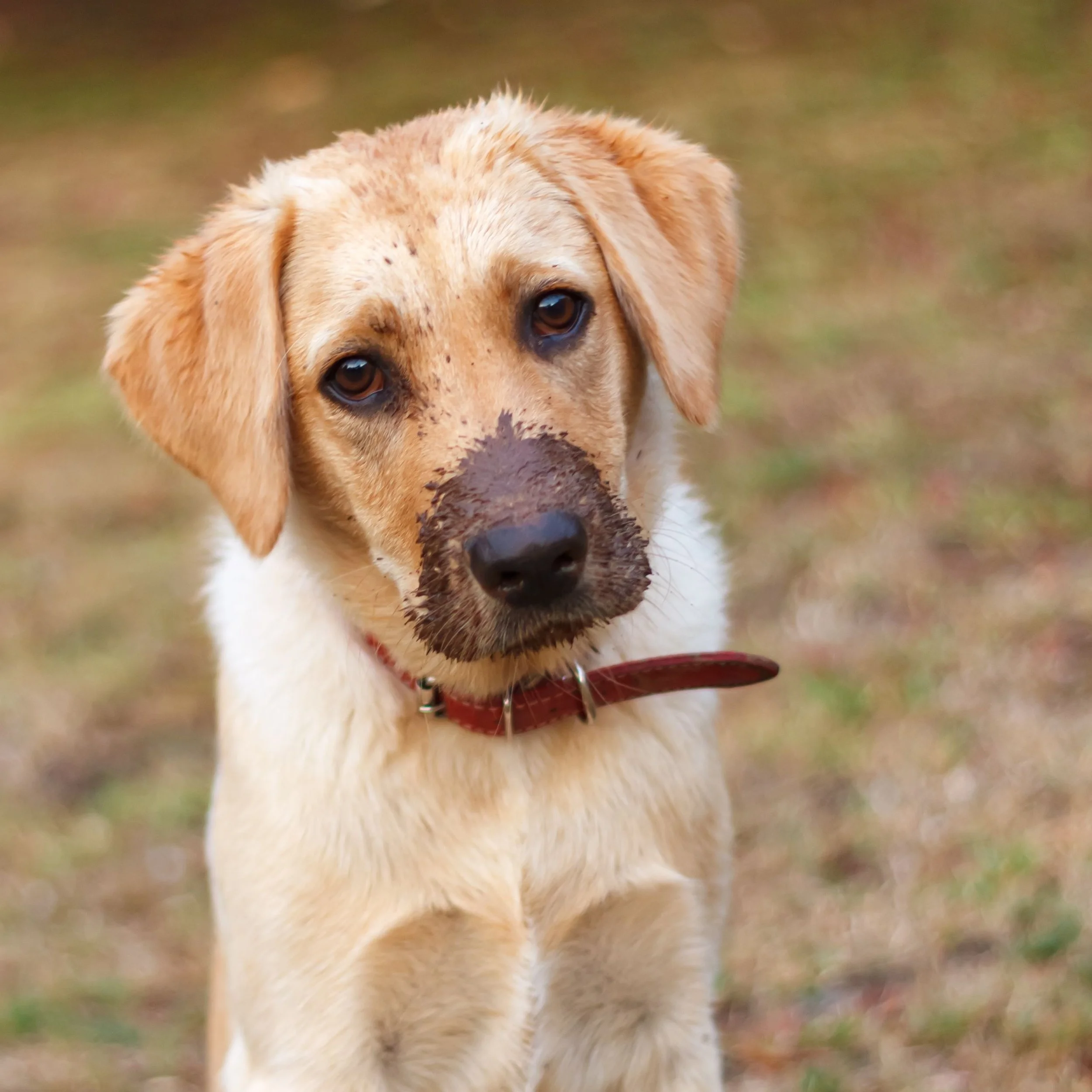
I prefer keeping cleaning products simple whenever possible—especially when they are used on floors, furniture, dog bedding, and other places our dogs regularly touch. If a gentler product can handle the mess, that is usually what I reach for.
Still, “natural” does not automatically mean dog-safe. Essential oils, concentrated vinegar, hydrogen peroxide, and other familiar ingredients can cause problems when they are too strong, mixed incorrectly, or swallowed.
The biggest risk often comes down to concentration and exposure. A dog licking cleaner from a bucket is very different from walking across a floor after it has been cleaned and allowed to dry. Wet products may irritate the skin or paw pads, while swallowed cleaners can cause drooling, vomiting, or gastrointestinal upset.
Most of this comes back to reading the product label, storing cleaners out of reach, and choosing simpler, pet-friendlier options when they make sense. You do not need to fear everything under the sink—just know what you are using and keep curious noses away from the bottle.
Cleaning Ingredients to Look Out For
Some cleaning ingredients can irritate a dog’s skin, stomach, eyes, or respiratory system—but where and how you use them matters. Cleaning your bathroom mirror with a standard glass cleaner is not the same as spraying it across a sliding glass door your dog regularly licks.
Here are a few ingredients worth noticing:
Bleach and chlorine: Concentrated bleach can irritate the skin, eyes, and lungs. You do not necessarily have to eliminate it, but dilute it correctly, ventilate the room, and keep your dog away from the wet solution. Never mix bleach with vinegar or ammonia.
Ammonia: Often found in glass and all-purpose cleaners, ammonia can irritate the eyes, nose, and throat. It may be perfectly practical for a bathroom mirror your dog cannot reach. For windows, floors, or other surfaces your dog may lick, consider an ammonia-free cleaner instead.
Phenols and pine oils: These are found in some disinfectants and floor cleaners. They can cause irritation or illness if swallowed, so I prefer avoiding them on floors, crates, and other dog-level surfaces.
Strong fragrances: Air fresheners, carpet powders, fabric softeners, and fabric refreshers can bother dogs with sensitive skin or respiratory systems. You do not need a completely scent-free house, but avoid spraying heavily around your dog or saturating the bedding where they sleep.
Essential oils: Natural does not always mean harmless. Highly concentrated essential oils can be unsafe when swallowed, inhaled in large amounts, or left on fur and skin. Skip them in cleaners intended for floors, dog bedding, crates, or other surfaces your dog regularly licks.
Acidic toilet bowl cleaners: These can cause burns and gastrointestinal problems if swallowed. Let the cleaner work with the lid closed, flush thoroughly, and prevent your dog from drinking from the toilet.
The point is not to hover over your dog while holding a spray bottle and worrying that one mist particle might reach them. Think about the surface. Can your dog walk on it, lie on it, lick it, or eat from it? If yes, choose a gentler product, rinse when directed, and let the area dry. If it is a bathroom mirror six feet off the ground, clean the mirror and carry on with your day.
Gentler Ingredients and Products Worth Reaching For
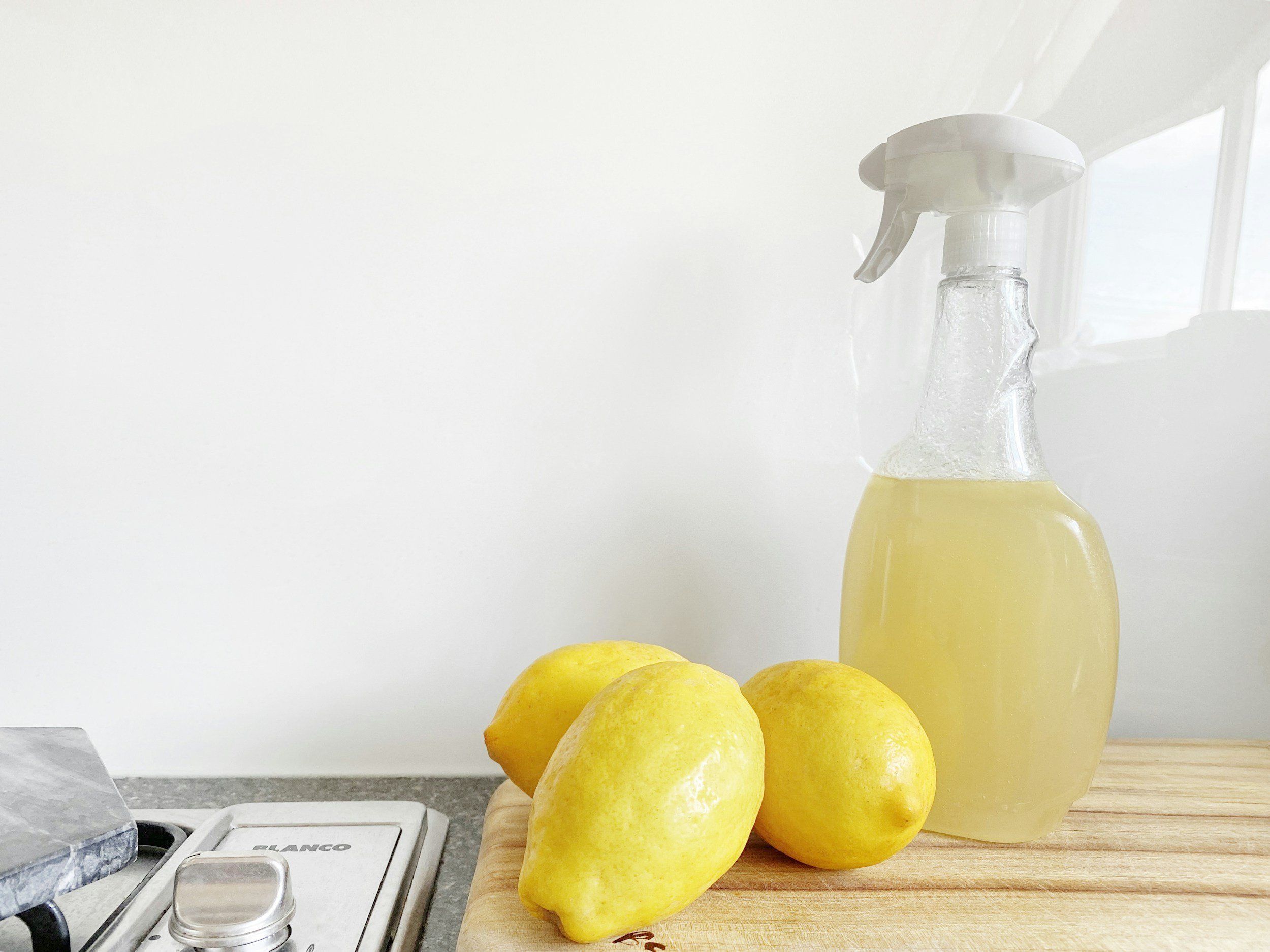
Now that we have covered what deserves a little caution, let’s talk about the products you may actually want beneath your sink. You do not need twenty specialty cleaners labeled with a paw print. A few simple ingredients can handle most everyday messes.
Warm water and Castile soap: A small amount of unscented Castile soap mixed with warm water makes a gentle, effective cleaner for many hard surfaces, washable pet items, and muddy paw prints.
Baking soda: This is useful for absorbing odors in carpets, rugs, and dog bedding. Sprinkle it lightly, give it time to work, and vacuum it up thoroughly before letting your dog roll across the area.
White vinegar: A diluted solution of vinegar and water can cut through grime and soap scum. However, vinegar should not be used on natural stone, waxed wood, or every type of flooring. And remember: never mix vinegar with bleach.
Hydrogen peroxide: Standard 3% hydrogen peroxide can help with certain tough stains, but it may discolor carpet or fabric. Test it somewhere hidden before treating the affected area.
Oxygen-based bleach: This can be a gentler alternative to chlorine bleach for washable dog bedding and stain removal. Choose an unscented product when possible and follow the laundry directions.
Enzyme cleaners: For pet accidents, an enzyme cleaner is often the best option because it breaks down the material causing the stain and odor instead of simply covering the smell.
Hypochlorous acid: This may sound like one of the intimidating ingredients we just discussed, but it is a low-concentration cleaning and disinfecting ingredient found in products such as Force of Nature. It can be used around pets when prepared and used according to the directions.
For ready-made cleaners, brands worth exploring include Force of Nature for everyday surfaces, Puracy for plant-based household cleaners, and Biokleen Bac-Out for pet stains and odors. For laundry detergent, look for an unscented or free-and-clear formula rather than assuming you need a special “dog detergent.”
No brand gets a lifetime dog-safe stamp of approval. Formulas can change, and one product may be a better fit than another within the same company. Turn the bottle around, check the current product label, and choose the simplest effective option for the job.
A Cleaner Home Without the Worry
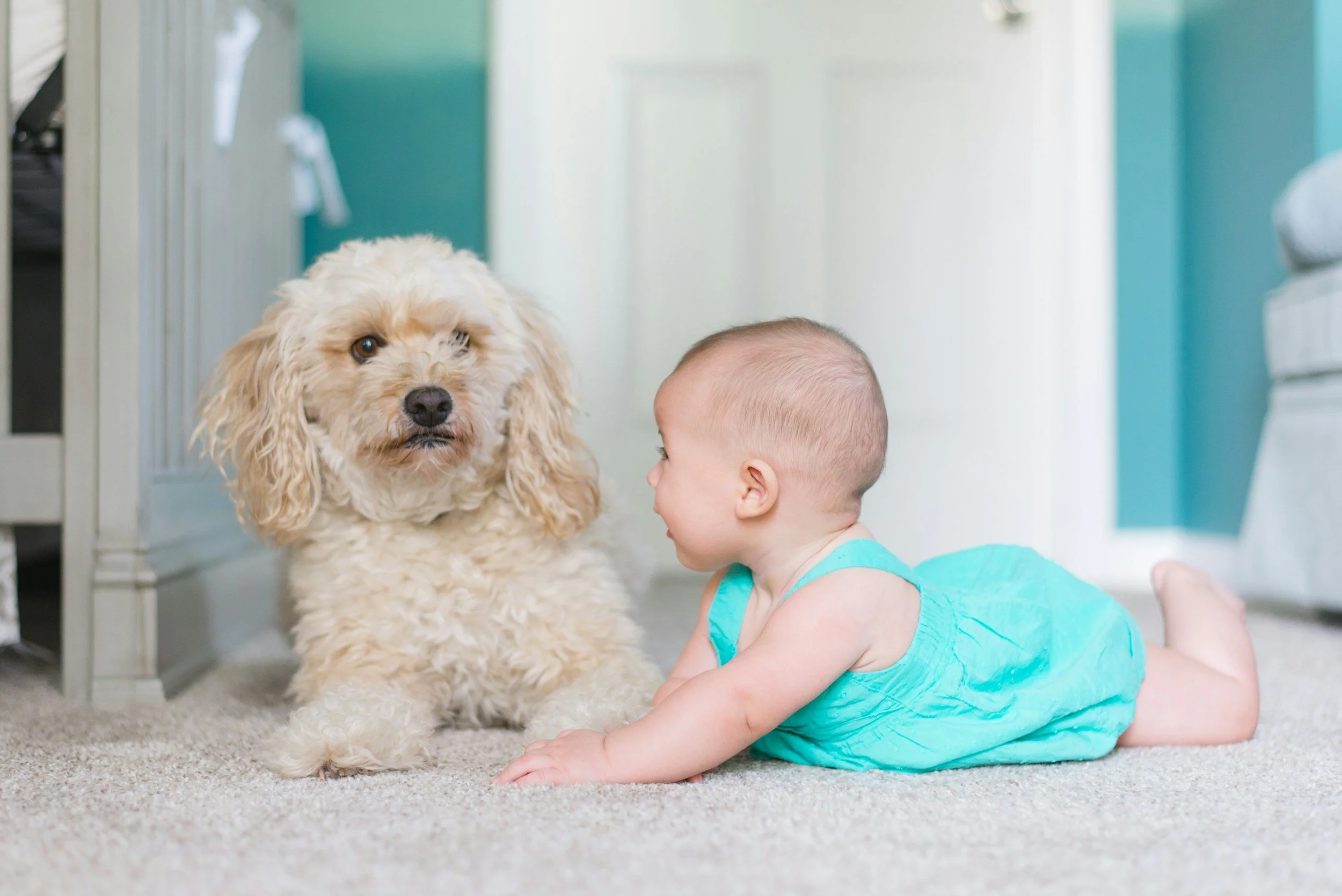
Keeping a clean home with dogs does not have to mean replacing every product you own or worrying whenever you reach for a spray bottle. It simply means paying attention to what you use, where you use it, and whether your dog is likely to walk across it, lie on it, or give it an unnecessary taste test.
Whenever possible, I prefer simpler products with fewer harsh chemicals—especially for floors, carpets, bedding, crates, and other dog-level surfaces. Warm water, baking soda, white vinegar, unscented Castile soap, and a dependable enzyme cleaner can handle more household messes than you might expect. Store-bought pet-safe cleaners are also helpful when you want something convenient and ready to use.
Above all, keep your common sense in mind. Follow the product label, never mix cleaning chemicals, let wet areas dry, and move your dog only when their curiosity is putting them too close to the action. Your dog does not need to evacuate the house because you are cleaning the bathroom mirror—but the pup trying to drink the mop water may need to practice their “place” cue.
Want to make your cleaning routine even simpler? Keep an eye out for my upcoming homemade dog-safe cleaning recipes, including an everyday surface spray, carpet deodorizer, fabric refresher, and pet-accident cleaner.
Check Out These Posts
Homemade Dog-Safe Cleaning Products
Skip the unnecessary fragrances and harsh ingredients with simple recipes for an everyday surface spray, carpet deodorizer, fabric refresher, and other useful household cleaners.
Daily Routines: How Structure Helps Dogs Thrive
Dogs thrive on structure, consistency, and predictable routines. This guide explains how simple daily habits can reduce stress, improve behavior, and help dogs feel calmer, more confident.
Choosing the Right Type of Dog Food for Your Dog
Turn the package around and learn what your dog’s food label is really telling you, including how to compare ingredients, calories, feeding guides, and different types of dog food.
Explore more realistic dog-care tips, training advice, and homemade recipes right here on Do It All Things Daily.