You turn over the bag of your dog’s food and begin reading the ingredients. Somewhere between the vague meat meal, hard-to-pronounce additives, and promises printed in much larger letters on the front, you start wondering: Could I make something better myself?
For many dog owners, that question comes after hearing about food recalls, watching a furry friend struggle with digestive issues, or becoming uncomfortable with how much trust we place in the pet food industry. We are told that store-bought food is the safest and most convenient choice, yet not all commercial dog foods are created with the same quality ingredients—or with your individual dog in mind.
It makes sense to want more control over what lands in your dog’s bowl.
Preparing homemade food allows you to choose fresh ingredients, recognize everything going into the meal, and avoid fillers or artificial preservatives you do not want your dog eating. You may use ground chicken from a local butcher, sweet potatoes from the garden, green beans from a farmer’s market, or eggs from someone you know. Instead of opening a bag and hoping its claims are honest, you can see, smell, and prepare the whole foods yourself.
That is one of the greatest benefits of homemade dog food: complete control over the ingredients.
But complete control also means complete responsibility. A bowl filled with meat, rice, and vegetables may look like a healthy homemade dog food meal—and your dog may enthusiastically clean the bowl—but looking nutritious is not the same as being nutritionally complete. Before we start collecting homemade dog food recipes, we need to understand what our dogs actually require and how to give them the benefits of fresh food without accidentally creating new health problems.
Homemade Does Not Mean “A Little of Everything”
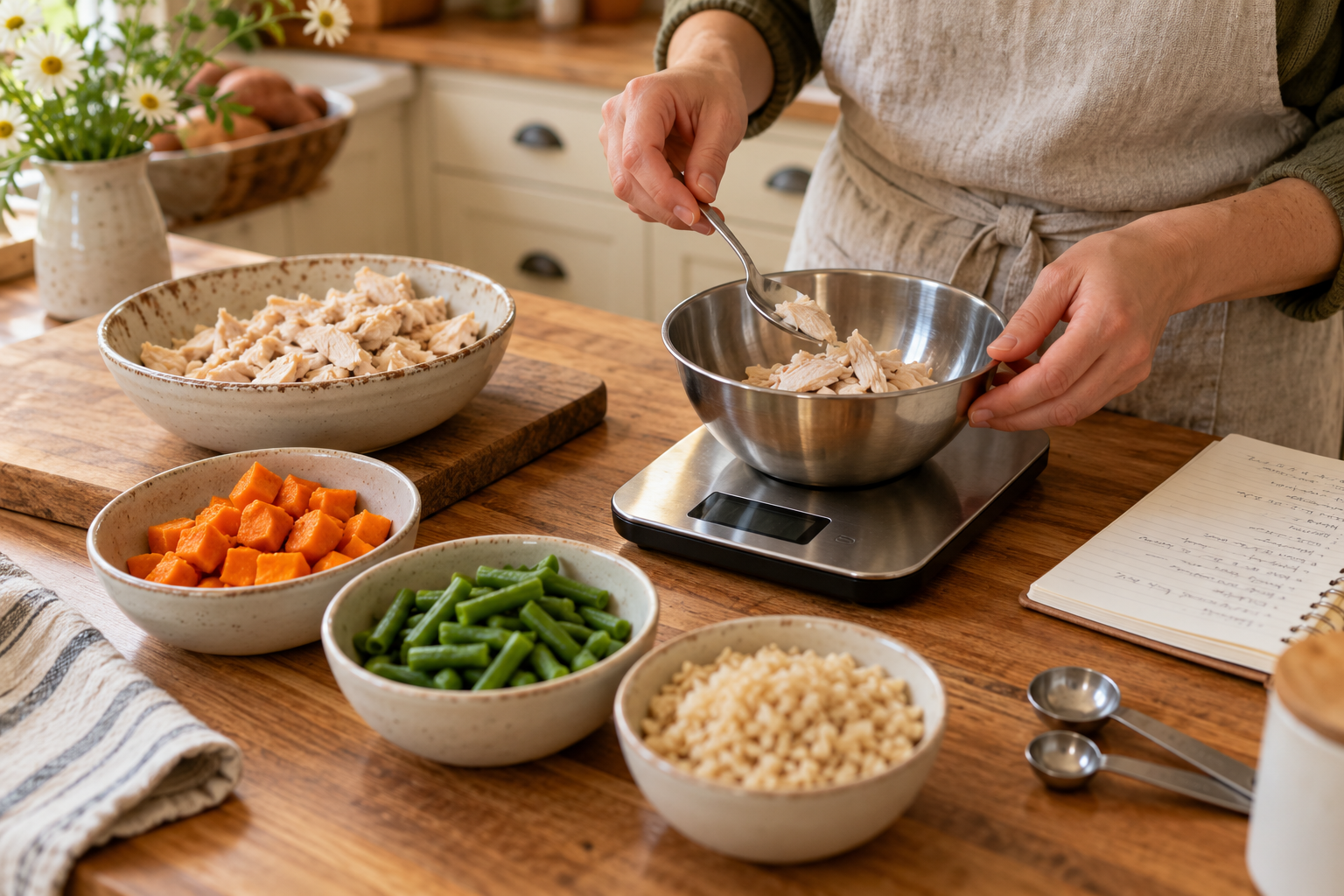
One of the easiest mistakes in home cooking is building your dog’s meals the same way you build your own dinner. You choose a protein source, add brown rice or sweet potatoes, toss in a handful of green beans, and admire the colorful bowl you created. [UC Davis recommends working with a board-certified veterinary nutritionist- UC Davis article ] It certainly looks fresher than dry brown pieces poured from a bag, but a homemade diet needs more than attractive whole food ingredients.
Dogs require specific amounts of protein, fat, calcium, phosphorus, essential fatty acids, essential vitamins, and other nutrients. Meat provides plenty of protein, but it does not provide everything your canine companion needs. In fact, feeding mostly meat without properly balancing the calcium and phosphorus can contribute to serious problems, including significant bone abnormalities. This is especially dangerous for puppies and young dogs whose bodies are still developing.
Organ meats, egg yolks, fatty fish, fish oil, vegetables, and carefully selected supplements may all have a place in homemade meals. However, each ingredient has a purpose. Organ meats are highly nutritious, for example, but adding more because they are “healthy” is not necessarily better. The same is true of healthy fats. Too much can quickly increase calories, cause digestive issues, and lead to weight gain.
This is why copying a pretty bowl from social media is not the best way to begin. That creator’s adult dog may have entirely different nutritional needs than your puppy, senior dog, or highly active working breed. Your dog’s age, ideal weight, activity level, life stage, food allergies, and existing health conditions all affect what should be placed in the dog bowl.
The first step is not choosing a type of meat or buying a food processor. It is learning what your own dog actually needs. A veterinary nutritionist or properly qualified canine nutrition professional can help you create a well-balanced diet designed around your dog’s specific nutritional needs. Think of that guidance as the blueprint—not someone taking the freedom out of home cooking, but someone helping you build a better meal without leaving out an essential piece.
Getting Back to Nature Does Not Mean Feeding Like a Wolf
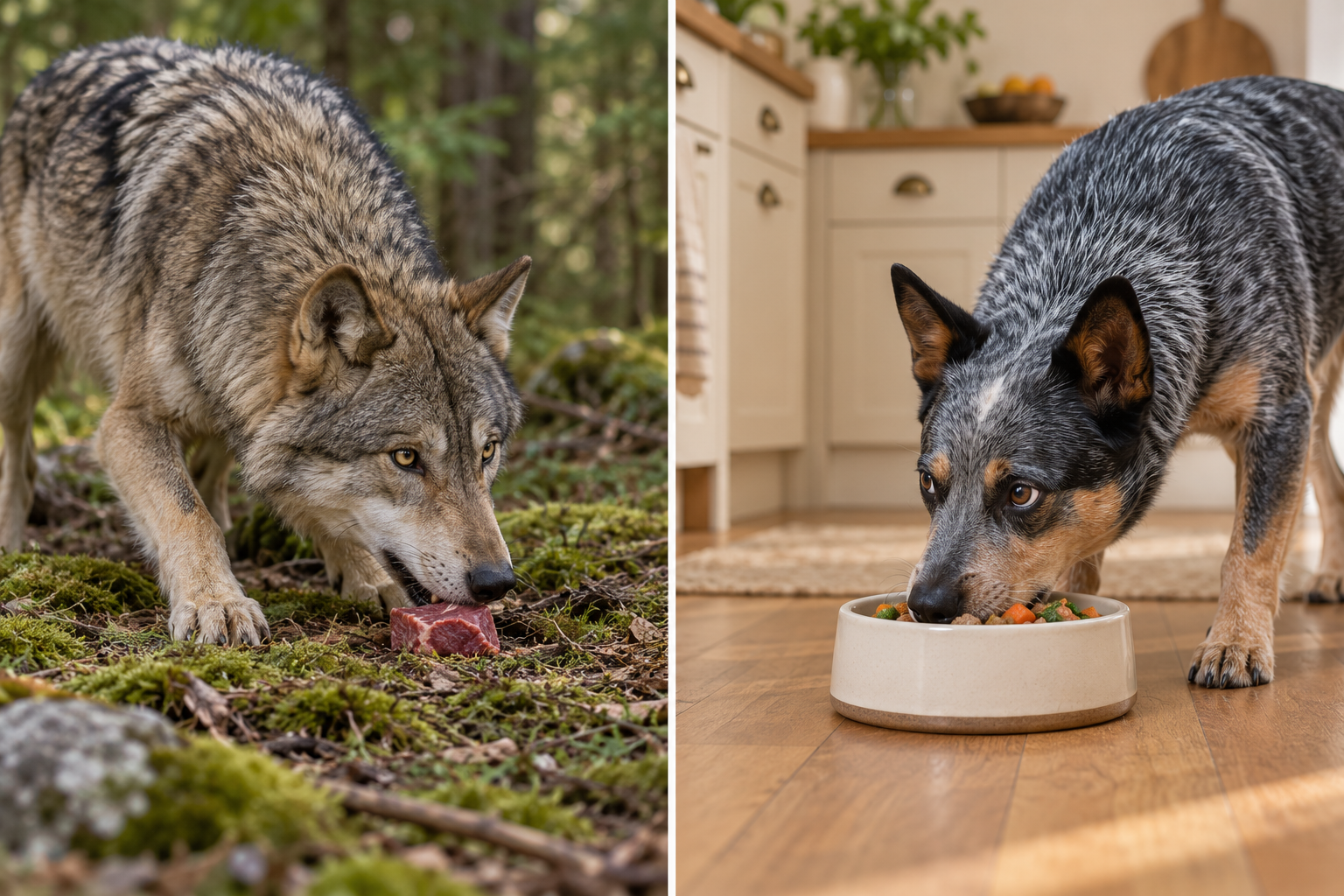
When pet owners begin questioning commercial dog foods, raw food often feels like the most natural next step. After all, wolves do not cook brown rice or measure fish oil into their dinner. But your furry friend is not living in the wilderness, hunting an entire animal, or eating every part of the prey. A package of raw meat from the grocery store is not the same as a complete natural diet.
This does not mean raw meat can never be part of a dog’s diet. It means raw food requires just as much research and careful balancing as home-cooked meals. Raw meat can also carry harmful bacteria, creating risks for the dog and the people handling the dog’s food—especially in homes with young children, older adults, or anyone with a weakened immune system.
Cooking the meat is often a more comfortable first step for dog owners who want to introduce fresh food without immediately diving into a fully raw diet. Ground chicken, lean beef, turkey, eggs, and certain types of fatty fish can all become useful ingredients when prepared safely and included in the proper amounts.
You also do not have to throw away the bag of store-bought food tonight and begin making every meal tomorrow morning. In fact, suddenly replacing a commercial diet with an entirely new food can lead to digestive issues, even when the new ingredients are wholesome.
Begin with one carefully chosen change. You might add a simple whole-food topper, replace an occasional meal with a properly balanced homemade recipe, or slowly transition toward a complete homemade dog food diet. Getting back to nature does not have to happen overnight. The best way forward is the one that improves your dog’s meals without turning their stomach—or your kitchen—upside down.
Know What Belongs in the Bowl—and Measure It
Fresh ingredients may feel safer and more natural, but “human food” does not always mean dog-safe food. Common kitchen ingredients such as onions, garlic, grapes, raisins, chocolate, xylitol, and macadamia nuts can be dangerous for dogs. Other foods may be safe for most adult dogs but inappropriate for a dog with food allergies, digestive issues, or certain health conditions.
Once you have a properly formulated recipe, follow it as written. This is not the time to channel your inner grandmother and measure everything with your heart. Use a food scale for ingredients and meal portions, especially when measuring organ meats, oils, supplements, and calorie-dense foods. Small changes can make a much bigger nutritional difference than they appear to make in the bowl.
You do not need an expensive food processor, specialty subscription, or a refrigerator filled with trendy ingredients to begin. Ground chicken, eggs, sweet potatoes, green beans, brown rice, and certain fatty fish are all accessible whole foods that may fit into a healthy homemade dog food recipe. Seasonal produce from farmer’s markets can also help keep costs reasonable—just make sure every substitution still works nutritionally.
Keeping a simple food journal is helpful, too. Record the recipe, meal portions, your dog’s weight, digestion, coat condition, and energy levels. Your dog cannot tell you that a meal is missing essential nutrients; in fact, most dogs would happily approve a diet made entirely of chicken. Tracking changes and scheduling regular wellness checks help you judge the diet by your dog’s health—not merely by how quickly the dog bowl is licked clean.
Better Food Begins with Better Knowledge
Making your own dog food can be a wonderful way to choose fresher ingredients and take back control of your dog’s diet. Just remember: getting back to nature still requires research, accurate measurements, and nutritional balance.
If you are ever unsure whether an ingredient is safe, check a trustworthy source such as the American Kennel Club or speak with a board-certified veterinary nutritionist before adding it to your dog’s bowl. A quick check is always better than a risky guess.