Most dog owners want to give their furry friend wholesome, nourishing food—but between work, errands, family, and everything else packed into our busy schedules, making homemade dog food can feel like one more thing we simply do not have time for.
The good news is that adding fresh food to your dog’s meals does not have to mean cooking an entirely separate dinner every night. A little meal planning, a few fresh ingredients, and some simple preparation can go a long way. You might prepare an occasional home-cooked meal, add real food to your dog’s regular commercial diet, or batch-cook a simple recipe to keep in the freezer.
In today’s post, we’ll look at realistic meal ideas that make feeding fresh food feel doable. We’ll also talk about the difference between a tasty homemade meal and a fully balanced homemade diet—because while chicken, brown rice, and fresh veggies may sound healthy, dogs have nutritional needs that cannot always be met by tossing a few good ingredients into a bowl.
Let’s make your dog’s meals a little fresher without making your life harder.
Homemade Meal, Food Topper, or Treat: Know the Difference
Making your own dog food can be a wonderful way to know exactly what is going into your dog’s bowl. I am not here to tell you that commercial pet food is the only responsible choice—or that feeding fresh, homemade food is too complicated for the average dog owner. It simply helps to understand what kind of homemade food you are preparing.
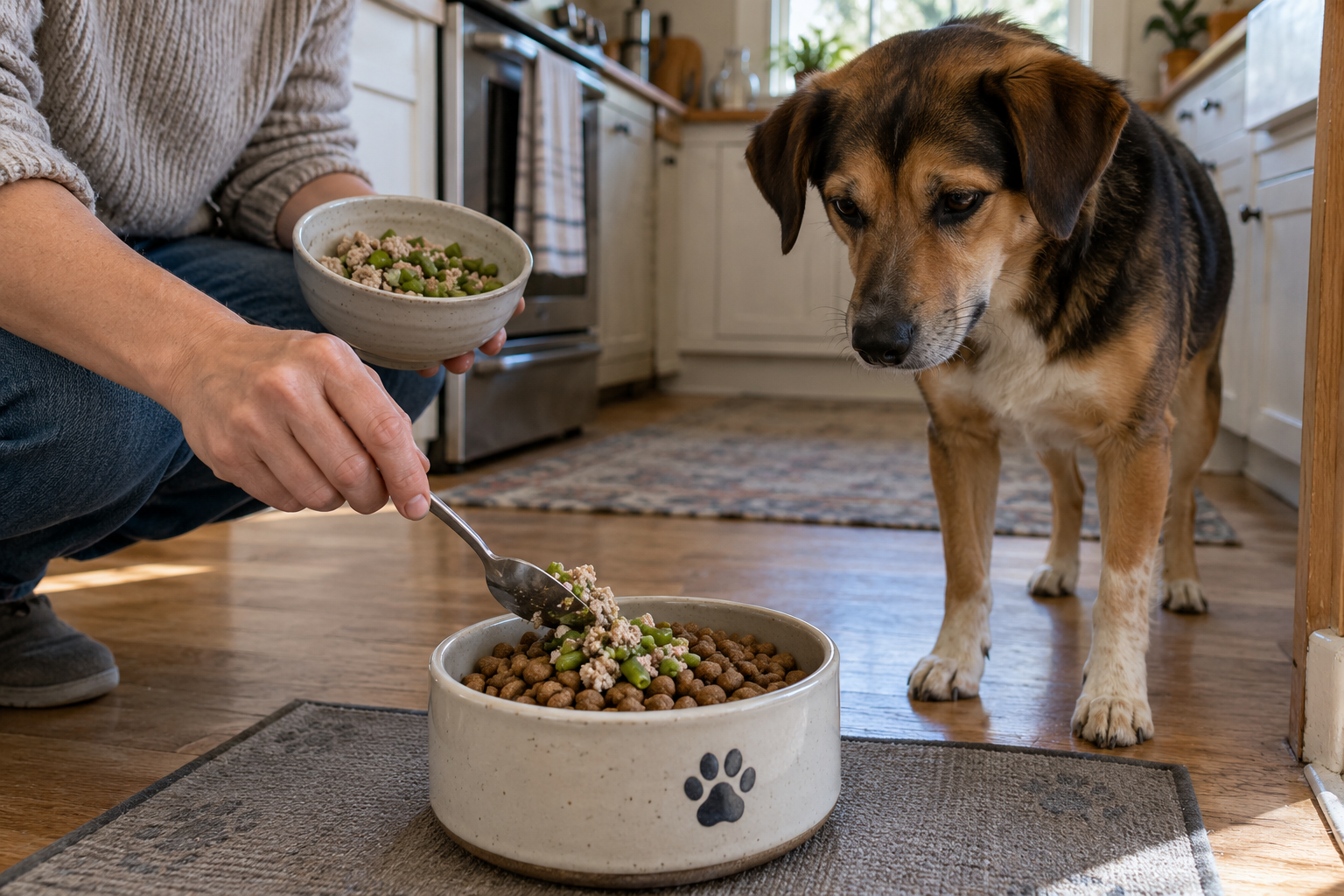
A spoonful of ground turkey and green beans added to your dog’s regular food is a fresh food topper. A home-cooked meal served occasionally is exactly that—an occasional meal. Homemade dog treats and small pieces of pet-safe human food are extras. These do not need to provide every essential nutrient as long as most of your dog’s diet is already complete and balanced.
A homemade diet fed every day for your dog’s entire life is different. It needs to meet your dog’s nutritional needs consistently, including the proper balance of protein, fat, calcium, vitamins, minerals, and essential fatty acids. That does not mean you cannot make it yourself. It means doing the proper research and, ideally, using a recipe formulated for your dog—not simply combining meat, rice, and vegetables because they sound healthy.
You may hear that wolves survive on raw meat in the wild, but our dogs are not wolves living in the wild. Even wolves consume more than packaged muscle meat, and surviving in nature is not the same as supporting a domestic dog’s best possible long-term health.
Commercial food is one option, not the only answer. A thoughtfully prepared homemade diet can also be a great option—you simply want to know which type of meal you are serving and what nutritional role it plays.
What Belongs in a Balanced Homemade Dog Meal?
A balanced homemade meal begins with real, wholesome ingredients, but balance comes from using those ingredients in the right amounts for your specific dog. A little guy, a large active dog, and a senior dog with health issues will not necessarily have the same nutritional needs—even if they are eating the same foods.
Protein sources may include ground turkey, chicken breasts, beef, eggs, fish, and small, carefully measured amounts of organ meats such as beef liver. These provide protein and essential amino acids that support your dog’s muscles, immune system, and overall health. Brown rice, oats, or sweet potatoes can provide energy, while pet-safe vegetables such as green beans, carrots, and pumpkin add fiber and valuable nutrients. Dogs also need appropriate sources of calcium, vitamins, minerals, and essential fatty acids. A little olive oil or fish oil may sound like an easy addition, but the correct type and amount matter.
This is where homemade dog food recipes can become more complicated than they first appear. Meat, vegetables, and rice may create a beautiful bowl of fresh food, but that combination is not automatically complete enough to become your dog’s entire diet.
For pet owners who want to make their own dog food, the free Balance It Recipe Builder is a helpful place to begin. Its recipes were developed with board-certified veterinary nutrition expertise and can be adjusted according to your dog’s life stage, weight and energy needs, preferred ingredients, and certain health conditions. Dogs with food allergies, heart disease, kidney concerns, or other medical needs may require veterinarian approval or an individually formulated recipe.
Your dog’s breed and size can provide useful context, but age, ideal weight, activity level, health, and whether the food will be fed occasionally or every day tell us much more. The goal is not to make home cooking feel intimidating. It is to give dog owners the right tools to prepare healthy homemade dog food with confidence.
An Easy Mix-and-Match Meal Formula for Busy Dog Owners
Once you understand what your dog needs, preparing fresh food becomes much less overwhelming. You do not necessarily need a complicated recipe every time you want to add something wholesome to your dog’s bowl. For an occasional simple meal or fresh food topper, start with a cooked protein, add a dog-safe carbohydrate or vegetable, and finish with a little moisture.
Your protein might be plain ground turkey, chicken breasts, lean beef, eggs, or another protein your dog tolerates well. Then add something gentle and filling, such as brown rice or sweet potatoes, along with fresh veggies like green beans, carrots, peas, or pumpkin. Chop everything into small pieces that are appropriate for your dog’s size, especially when feeding a small dog or senior dog that may have trouble chewing.
A spoonful of plain, dog-safe bone broth or warm water can add moisture and make the meal more appealing. Always check bone broth carefully—it should not contain onions, garlic, excessive salt, or added seasonings.
The best part of this method is that you can use ingredients you already have from the grocery store or farmers market. If you are cooking plain ground turkey for your own dinner, set a small amount aside before adding seasoning. If you prepared sweet potatoes for the family, your dog can enjoy a little too, as long as they are plain.
Introduce new foods one at a time and in small amounts. Adding several different foods at once makes it difficult to know which ingredient caused an upset stomach if your dog does not tolerate the meal well.
This mix-and-match approach is a great option for toppers and occasional homemade meals. If you plan to use it as your dog’s primary food, you will still need a properly formulated recipe with the necessary calcium, vitamins, minerals, and essential fatty acids. Simple does not have to mean incomplete—it simply requires a little meal planning.
Three Simple Dog Meal Ideas to Make at Home
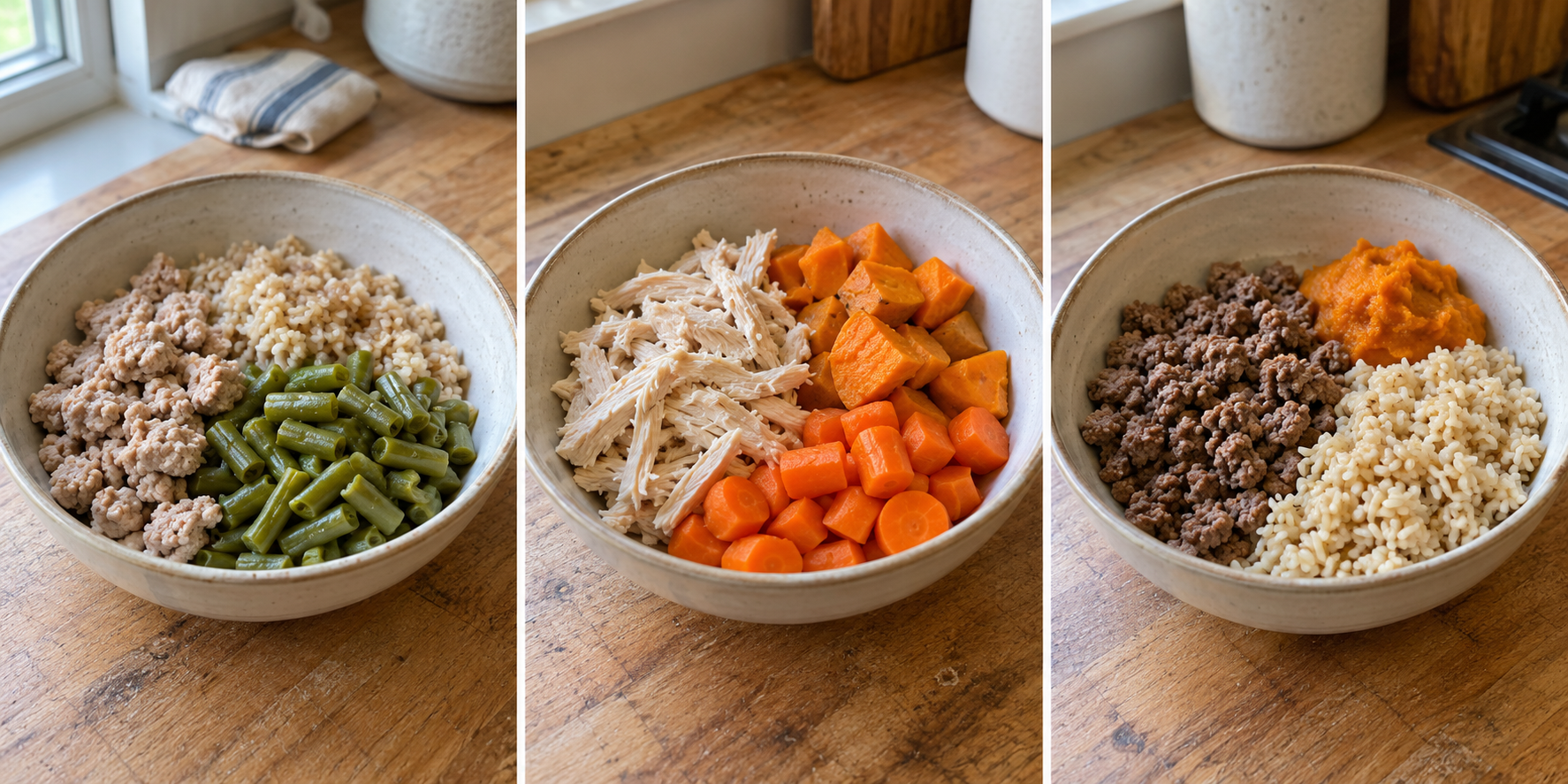
Now that we have covered the basics, let’s get into a few meal ideas you can actually use. These combinations can be served as fresh food toppers, occasional home-cooked meals, or used as the starting point for a properly balanced homemade recipe.
Ground Turkey, Brown Rice, and Green Beans
Cook plain ground turkey thoroughly and drain any excess grease. Combine it with cooked brown rice and chopped, steamed green beans. You can add a little warm water or dog-safe bone broth for extra moisture.
This simple meal is easy to make in a large bowl and divide into smaller portions. It is also a great option when you want a homemade meal made from ingredients that are easy to find at nearly any grocery store.
Chicken and Sweet Potato Bowl
Cook an unseasoned chicken breast and cut or shred it into small pieces. Add plain cooked sweet potato and a pet-safe vegetable such as carrots, peas, or green beans.
Sweet potatoes add fiber and natural sweetness, making this a favorite recipe for many dogs. If your dog is trying these foods for the first time, begin with a small amount rather than immediately filling the entire bowl.
Beef and Pumpkin Dinner
Brown some lean ground beef without butter, oil, salt, or seasoning, then drain it well. Mix it with plain pumpkin and a dog-safe carbohydrate such as brown rice or oats. Be sure to use plain pumpkin—not sweetened pumpkin pie filling.
This can be a comforting simple meal, but pumpkin is not a cure-all for every upset stomach. Too much can sometimes make digestive problems worse, so start small.
You can easily adjust these meal ideas using different proteins and fresh veggies your dog already tolerates. Just remember that substitutions change the nutritional makeup of the food. If one of these combinations becomes a regular part of your dog’s diet, it will need to be properly balanced for your canine companion.
We will explore each of these ideas more deeply in separate homemade dog food recipes, including exact ingredients, preparation instructions, storage tips, and ways to balance them for regular feeding.
Batch Cooking Without Spending All Day in the Kitchen
Making homemade food for your dog does not require standing over the stove every evening. The easiest way to fit home cooking into busy schedules is to prepare several portions at once using ingredients that can cook while you handle the rest of your day.
An Instant Pot or slow cooker can make this especially simple. Plain chicken breasts or ground turkey can be cooked in larger batches, while brown rice, sweet potatoes, and pet-safe vegetables can be prepared separately. Once everything has cooled, combine the ingredients in a large bowl according to the homemade dog food recipe you are following.
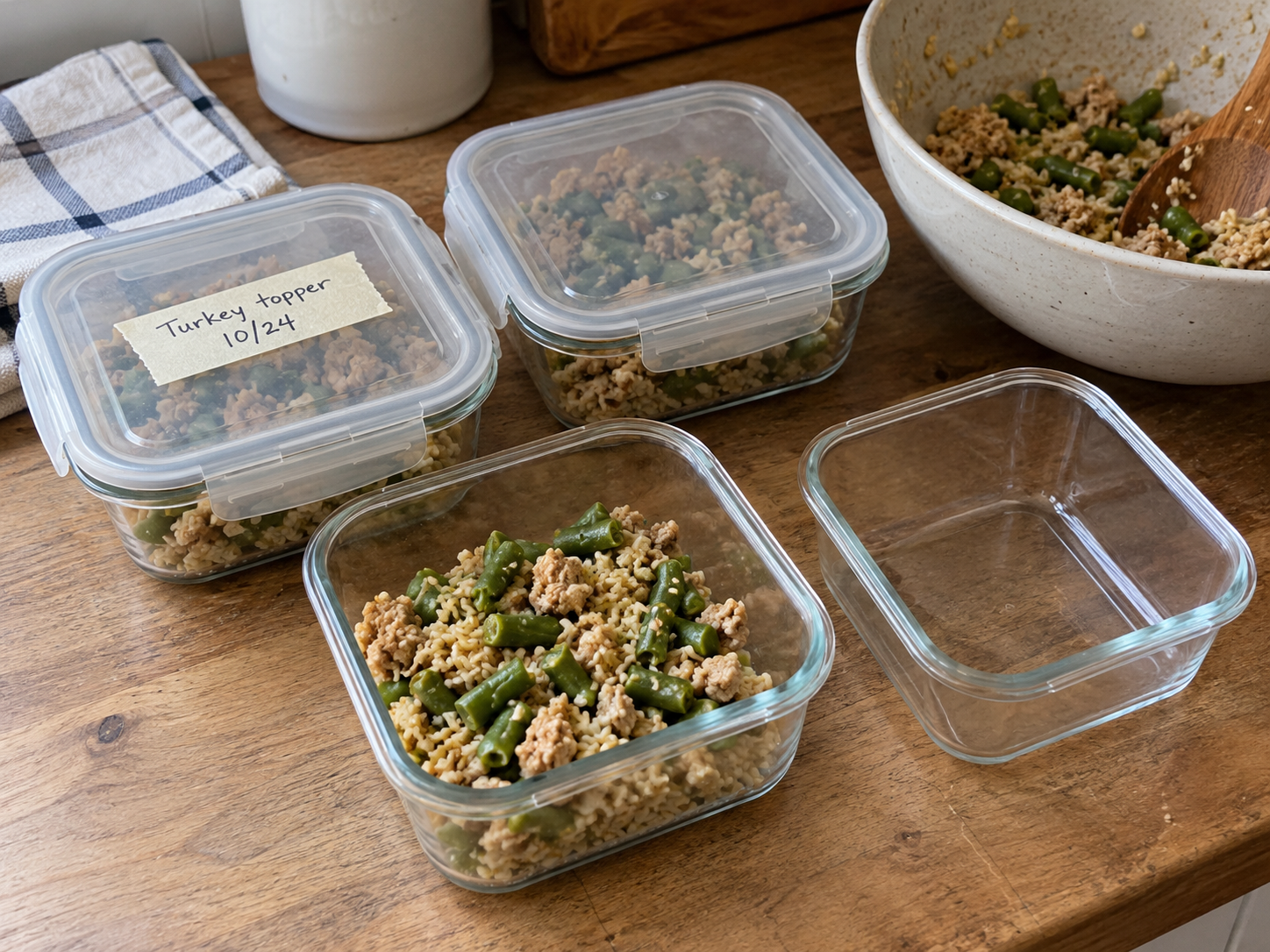
If you are only making toppers, portion the mixture into the small amount your dog typically receives. For complete homemade meals, divide the food according to the serving size calculated for your dog’s nutritional needs. This prevents having to measure everything when you are already rushing out the door or trying to get dinner on the table.
Keep enough food in the refrigerator for the next couple of days, then freeze the rest in individual portions. Reusable containers, silicone freezer trays, or a labeled freezer bag all work well. Adding the recipe name and preparation date will save you from staring at a frozen container later and wondering what is inside.
Move the next portion into the refrigerator the night before you need it. You can serve the food cold if your dog enjoys it, allow it to reach room temperature, or add a little warm water. Avoid serving food piping hot, and never leave cooked food sitting out for hours.
The best part of batch cooking is that you control how much work it becomes. You might prepare a full week of food, freeze occasional home-cooked meals for especially busy days, or simply keep a few fresh toppers ready to make your dog’s regular food more exciting. Choose the routine that works for your life and your dog.
Shopping for Fresh Ingredients on a Realistic Budget
Fresh food does not have to come from an expensive specialty pet store. Many wholesome ingredients can be found during your regular grocery store trip or at a local farmers market.
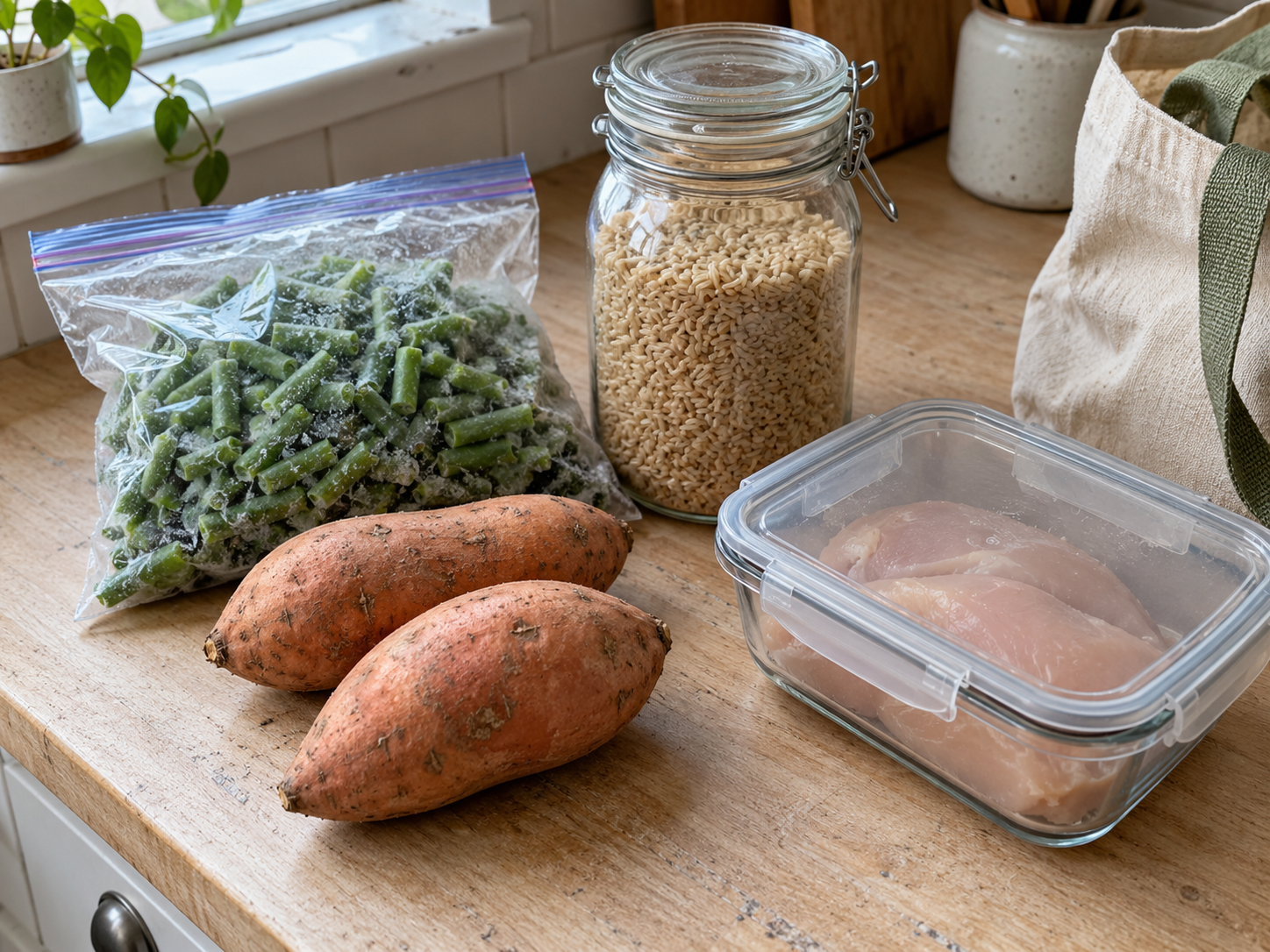
Watch for sales on ground turkey, chicken breasts, lean beef, eggs, and seasonal produce. Frozen green beans, carrots, and other plain vegetables are also healthy options—and they are often cheaper, already chopped, and less likely to go to waste. Just check the ingredient list for added salt, sauces, or seasonings.
Meal planning helps you use the same whole foods for both your family and your dog. Set aside your dog’s portion before adding butter, garlic, onions, salt, or other seasonings. You can also freeze leftover dog-safe vegetables or cooked meat in small portions for future meals.
The best choice is not always the most expensive ingredient. It is fresh food that fits your budget, agrees with your dog, and serves a clear purpose in their overall diet.
Know What Should Stay Out of Your Dog’s Bowl
Sharing fresh food with your dog can be a healthy option, but not everything we eat is safe for them. Some everyday ingredients—including onions, garlic, grapes, raisins, chocolate, macadamia nuts, xylitol, and cooked bones—can make dogs seriously ill. Even dog-friendly ingredients, such as peanut butter, bone broth, raw fish, and beef liver, require a closer look at the label, preparation, or serving amount.
You do not need to memorize every ingredient before adding fresh food to your dog’s meals. However, it is a good idea to check unfamiliar foods first and introduce new foods in small amounts.
A Simple Meal Can Make a Difference
Feeding your dog fresh food does not have to become another overwhelming task. Start with simple additions, choose wholesome ingredients, and learn what works for your furry friend. When you are ready to go further, explore my homemade dog food recipes, dog-safe ingredient guides, and balanced-feeding resources to support your dog’s health with confidence.
Check Out These Dog Care Posts
Looking for more realistic ways to support your dog’s health at home? Continue with these helpful guides:
Choosing the Right Type of Dog Food for Your Dog — Learn how to look past the marketing on the front of the bag, understand ingredient labels, and choose food based on your dog’s individual needs.
Dog-Safe Cleaning: Creating a Cleaner Home for You and Your Dog — Discover which household products deserve a little extra caution and how to maintain a clean home without overcomplicating everything.
Easy At-Home Paw Care for Dogs — Learn how to check, clean, protect, and care for your dog’s paws through changing weather and everyday adventures.