There is something satisfying about stepping outside for basil while dinner simmers or snipping chives instead of buying another plastic package at the grocery store. Fresh herbs bring fragrance, color, and flavor into everyday meals, and growing them can start with just a few pots.
You do not need a sprawling kitchen garden or a perfect green thumb. You need herbs you actually enjoy cooking with, enough light, and a planting setup that suits your space.
This step-by-step guide covers how to start your own kitchen herb garden, choose useful varieties, understand their growing needs, and keep harvesting beyond that first exciting handful.
Start With What You Cook
The best herbs for your first herb garden are the ones that earn their place on your plate. Before visiting a local nursery, think about your regular meals. Do you make pasta, homemade salsa, roasted vegetables, soups, or salad dressings?
Choose three to five favorite herbs rather than buying every interesting plant at the garden center. A small collection is easier to water, harvest, and learn from. Expand once you understand what grows well in your conditions.
Herbs for Italian Cooking
Basil, oregano, thyme, rosemary, sage, and marjoram commonly appear in Italian cooking or Italian seasoning blends. Flat-leaf parsley is another useful addition for finishing pasta, soups, and vegetables.
Start with basil and oregano if tomato sauces and pizza are regular meals. Add thyme for roasted vegetables, rosemary for potatoes and bread, or sage for beans and butter sauces. There is no single required Italian seasoning recipe; grow the flavors you use most.
Herbs for Salsa
Cilantro is the obvious starting point for many fresh tomato salsas. Its leaves provide that familiar bright flavor, while the mature seeds are the spice called coriander.
Cilantro prefers cooler growing weather and flowers quickly in hot weather. Sow small batches every few weeks while conditions remain suitable instead of expecting one plant to supply the entire growing season. Parsley offers a different flavor if cilantro is unwelcome at your table.
Herbs for Everyday Meals
Chives, parsley, thyme, and basil cover plenty of basic cooking. Chives suit eggs and potatoes; parsley brightens soups; thyme works in stews; basil shines with tomatoes.
Garlic chives offer a garlicky alternative to common chives. Dill is useful for fish, cucumber salads, and yogurt sauces. Lemon thyme adds citrus notes, while lemon balm suits tea and fruit dishes. Choose culinary herbs by taste, then experiment with flavorful combinations of your own.
Choose Your Growing Setup
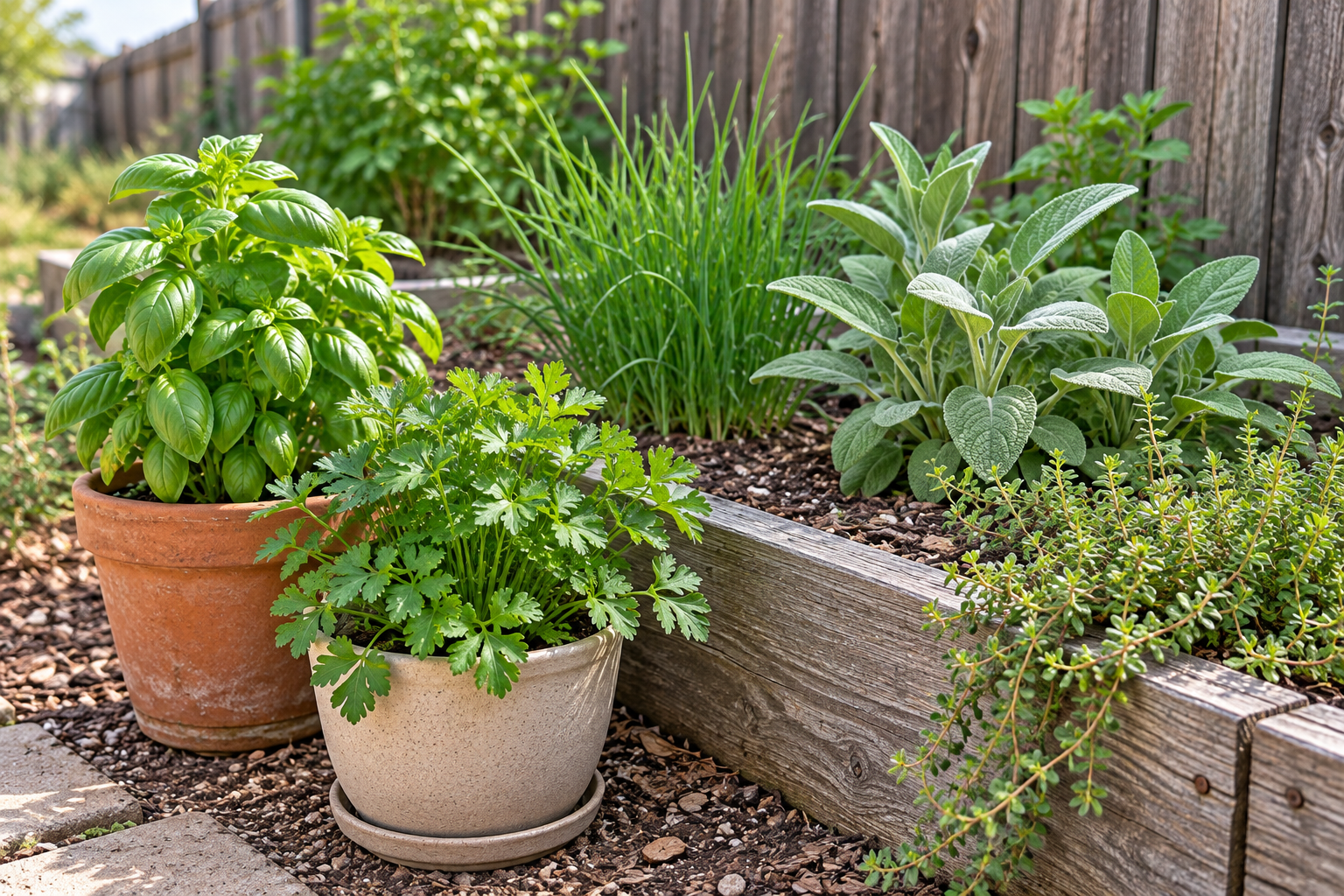
A kitchen herb garden is a collection grown for cooking, not necessarily a garden inside your kitchen. Your best way to begin might be a patio container, an outdoor garden bed, or an indoor herb garden with supplemental lighting.
Containers on a Patio or Balcony
Container gardens are a great way to start without a lot of space. They also let you adjust placement and keep plants with different watering needs separate.
Choose pots with drainage holes and enough room for mature roots. Many compact herbs can begin in containers around eight to twelve inches wide, but rosemary and vigorous growers eventually need a larger container. Tiny decorative pots dry quickly and limit growth.
Plastic, terracotta, and ceramic pots can all work. Unglazed terracotta dries faster; glazed containers retain moisture longer. Give mint its own container because it spreads aggressively. Keep lemon balm contained or remove flowers before seeds develop if unwanted spreading becomes a problem.
Raised Beds and In-Ground Gardens
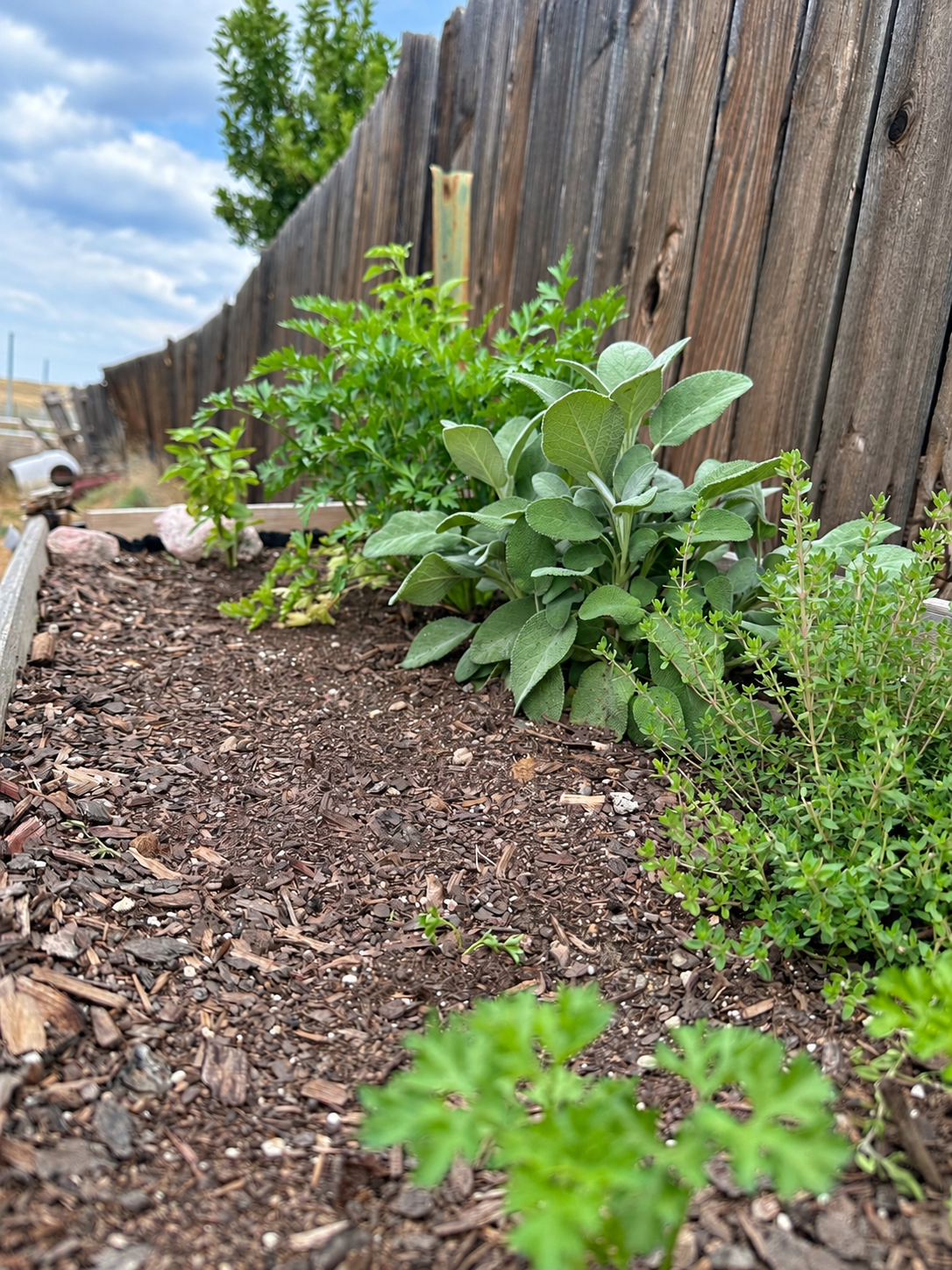
A raised bed offers a practical option where existing soil drains poorly. An in-ground garden works well when you already have suitable soil and a sunny spot near the kitchen door.
Before planting, assess your soil type. Heavy clay soils that stay wet can be difficult for Mediterranean herbs. Incorporate appropriate organic matter across the bed, or choose containers rather than trying to fix a soggy planting hole. Good drainage matters more than creating rich, heavily fertilized soil.
Place taller plants where they will not shade smaller plants. Follow mature spacing on labels rather than packing everything tightly together. A small plant can become surprisingly wide within a season.
A Sunny Windowsill or Indoor System
A kitchen window makes harvesting convenient, but convenience cannot replace light. A bright south-facing window is often a useful starting point in the Northern Hemisphere. However, winter days, nearby buildings, and window coverings can leave herbs short of enough light.
Weak, stretched stems often signal inadequate lighting. Use a grow light when needed, following its instructions for distance and timing. A countertop hydroponic system is another option; follow its nutrient and cleaning directions instead of treating it like a pot of soil.
Indoor harvests may be modest, especially in winter. Start with realistic expectations rather than assuming a sunny windowsill will replace every grocery purchase.
For a manageable first setup, try separate pots of basil, parsley, chives, and oregano. Keep the basil and parsley within easy reach for frequent moisture checks. Give oregano a position with strong light and freely draining mix. Label each pot with its name and planting date. After a month, note what you harvested and what struggled. Those observations make your next planting choices much more useful.
Understand Annual, Biennial, and Perennial Herbs
Understanding a plant's life cycle helps explain why some herbs return while others need replacing.
Annual herbs complete their life cycle in one growing season. Cilantro and dill are common examples. Basil is usually grown as a warm-season annual where frost occurs, although its biology varies by species and climate.
Biennial herbs usually grow leaves during their first year, then flower and set seed during their second. Parsley belongs here. Gardeners often replace it annually because flowering reduces the useful leafy harvest.
Perennial herbs can live for several years when their climate and growing conditions suit them. Chives, oregano, thyme, sage, mint, and lemon balm fit this group. Perennial does not automatically mean winterproof everywhere.
Cold-Hardy and Tender Herbs
For colder climates, common chives are a dependable starting point. Many culinary thyme, oregano, and garden sage varieties also overwinter where their listed hardiness matches local conditions. Check the specific variety rather than relying on the herb's common name.
Basil is frost tender. Rosemary generally needs a warmer climate than cold northern gardens provide, although cultivar hardiness varies. Grow it in a movable pot if you plan to protect it indoors before freezing weather.
Cilantro and parsley tolerate cool conditions better than basil, but that does not make cilantro a returning perennial. Cold tolerance and longevity are different traits.
Container roots experience greater winter exposure than roots in the ground. A hardy herb in a small pot may still need protection. In places with harsh winters, ask your local Extension office which varieties reliably survive outdoors.
Plant Your Herbs Step by Step
1. Check the Sunlight
Most culinary herbs grow best with at least six hours of direct sunlight outdoors. Watch your proposed location through the day before planting. A bright-looking corner may receive fewer hours of sunlight than you expect.
Some herbs, including parsley and mint, tolerate partial shade. Afternoon shade can help cilantro as temperatures rise. Sun-loving rosemary, thyme, and oregano generally need plenty of sun for compact growth.
2. Decide Between Seeds and Starter Plants
Herb seeds are an economical choice for basil, cilantro, and dill. Follow packet instructions for sowing depth, temperature, and timing. Direct sowing is often convenient for cilantro and dill because transplanting can disturb their roots.
Starter herb plants offer an easy way to begin harvesting sooner. Buy healthy, clearly labeled plants from a plant nursery, especially for slower-growing woody herbs. Avoid yellowing foliage, obvious pests, or tightly circling roots when possible.
3. Prepare the Container or Bed
For pots, use a good quality potting mix rather than dense garden soil. Make sure water can leave freely. Adding gravel beneath the mix does not solve poor drainage and reduces usable root space.
In beds, loosen soil and address drainage before planting. Your herb garden needs a workable root zone, not a deep pocket of fertilizer. Choose a setup you can maintain comfortably.
4. Plant and Water
Set transplants at approximately the depth they grew in their nursery containers. Gently firm the mix around the roots, then water thoroughly. Keep the base of the plant clear rather than burying stems under mulch.
Gradually acclimate indoor-grown plants to outdoor sun and wind before leaving them outside full time. Wait until frost danger has passed and conditions are warm enough before planting tender herbs outdoors.
Keep Your Herbs Growing
Water according to the plant and its conditions, not a rigid calendar. Check the moisture level with your finger and water containers thoroughly when needed, allowing excess to drain. Empty saucers rather than leaving roots standing in water.
Basil, parsley, and mint prefer more consistent moisture. Established thyme, oregano, sage plants, and rosemary generally prefer drying somewhat between waterings. Group different plants by these needs instead of assuming every herb belongs in the same planter.
Small containers may need frequent checks during heat and wind. Larger pots hold moisture longer, but a lot of soil around a tiny root system can remain wet too long indoors.
Feed container plants moderately with a fertilizer labeled for edible plants, following directions. More fertilizer does not guarantee good flavor or best results. Check regularly for pests, remove damaged growth, and leave room for air circulation.
How Herbs Benefit Other Plants
Herbs can earn their space even when grown alone: they provide food, fragrance, flowers, and convenient harvests. Mixed into vegetable gardens, flowering herbs can also supply nectar and pollen for pollinators and beneficial insects.
Dill and cilantro flowers attract several helpful insects, including species whose young eat aphids. Parsley and dill can host swallowtail caterpillars. Common chives bring purple flowers, while flowering oregano plants and thyme attract visiting bees.
These benefits do not mean planting basil beside a tomato guarantees fewer pests or better tomatoes. Companion planting is not a substitute for healthy soil, adequate spacing, or checking plants for trouble.
Allow a few herbs to flower while keeping others trimmed for leafy harvests. Thyme can make an attractive edging perennial where its mature size, drainage needs, and hardiness fit the site.
Harvest a Little, Often
Wait until plants have enough established growth before harvesting. Snip basil just above a leaf node, where leaves join the stem, to encourage branching. Cut parsley's outer stalks near the base rather than taking only the leaf tips.
Harvest chives by cutting selected leaves near the base. With woody herbs, take tender tips without cutting heavily into bare old wood. As a general beginner rule, remove no more than one-third of healthy established growth at once.
Avoid stripping the whole plant. Regular light harvesting leaves enough foliage to support recovery and gives you a steady supply for dinner.
Save Extra Herbs for Later
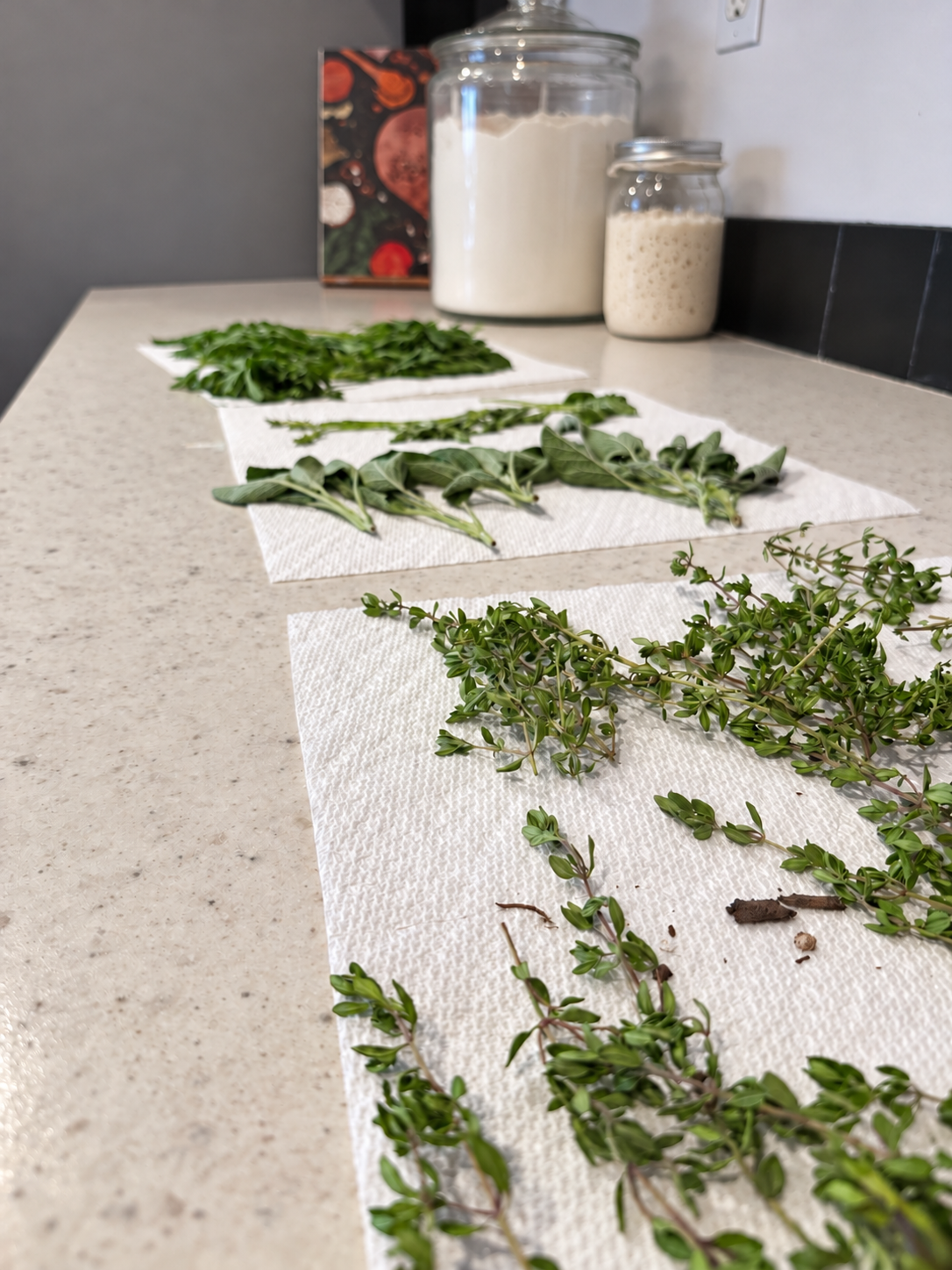
Freeze surplus basil, parsley, or chives in small portions for future use. Dry thyme, oregano, and sage with good airflow, or use a dehydrator according to its directions. Small bundles in ventilated paper bags can keep dust away while drying suitable herbs.
Store dried leaves only once completely dry, in labeled airtight containers away from heat and light. Start small, cook with what you grow, and let your own herb garden expand alongside your confidence.
Your kitchen herb garden does not have to be elaborate to become a useful part of everyday cooking. Start with a few herbs you love, give them the light and care they need, and make a habit of snipping something fresh for your meals. Some plants will thrive, and others may take a little experimenting—that is part of learning what works in your space. Whether you begin with basil on the patio or chives beside the back door, that first harvest is a small, satisfying step toward growing more of what you eat.
Check Out These Blogs
Ready to keep growing? Whether you’re bringing your herbs indoors or expanding your backyard garden, these guides can help you take the next step:
2026 Best Hydroponic Systems to Grow Indoor Gardens — Curious about growing herbs without soil? Explore indoor gardening options and my experience with a Gardyn system.
Watering Your Garden When It’s Hot, Dry, and Windy — Learn how to adjust your watering habits when heat and wind make keeping plants hydrated a challenge.
Cheyenne, Wyoming Spring Garden Tips for Beginners — Planning an outdoor garden? Start with practical advice on frost dates, soil, seedlings, and protecting young plants.