Asparagus Seeds vs Crowns: A Simple Growing Guide
I have grown asparagus both ways in my home garden, and the difference between the two has been more noticeable than I expected. My seed-started plants are now three years old, while my asparagus crowns were planted only this year. Watching them grow side by side has given me a much clearer idea of which method I would recommend—and what gardeners should realistically expect from each one.
Both methods can eventually create a productive asparagus patch, but they differ considerably in cost, growth, and the amount of patience required. Before deciding which one to plant, it helps to understand exactly what asparagus crowns are and why they tend to give gardeners a stronger head start.

What Are Asparagus Crowns?
Asparagus crowns are one-year-old dormant roots. Most garden centers sell first-year crowns in late winter or early spring, often packaged in a plastic bag with peat moss or another material that protects soil moisture.
Crowns give gardeners a head start because the plants have already spent a year developing strong roots. When healthy new crowns are planted correctly, new spears may appear during the first season. However, those spears should generally be left alone so the young plants can produce healthier growth.
One benefit of crowns is convenience. You do not need to germinate a tough seed coat, care for small asparagus seedlings, or wait an extra year for the plants to reach the same stage. Crowns are a good idea for a first-time asparagus grower who wants the simplest start.
The disadvantage is cost. Buying a large number of plants can become expensive, especially when filling a new asparagus bed. Old crowns that have dried out or developed rot may also struggle after planting, so choose firm, healthy-looking roots whenever possible.
Preparing an Asparagus Bed
Whether you choose seeds or crowns, soil preparation determines your long-term results. Asparagus is a perennial vegetable, so its planting area should not be somewhere you expect to redesign next year.
Choose a location with full sun and good drainage. Fertile soil enriched with organic matter or well-rotted manure will support strong roots and thicker spears. The ideal soil pH is approximately 6.5 to 7.0. Slightly acidic soils can usually be amended, but testing the soil before planting is helpful. Great locations are usually, in its own raised garden, or on an edge of a larger raised or in-ground garden.
Sandy soils naturally drain well, while heavy clay soils may hold too much water around the roots. If you have heavy soil or moist types of soil, consider creating a raised bed. Remove perennial weeds, large stones, and old roots before planting, because weeding becomes more difficult after the asparagus bed is established.
Asparagus needs more space than many annual vegetables. Mature plants develop tall, airy foliage during early summer, so place the patch where it will not shade smaller plants in the vegetable garden.
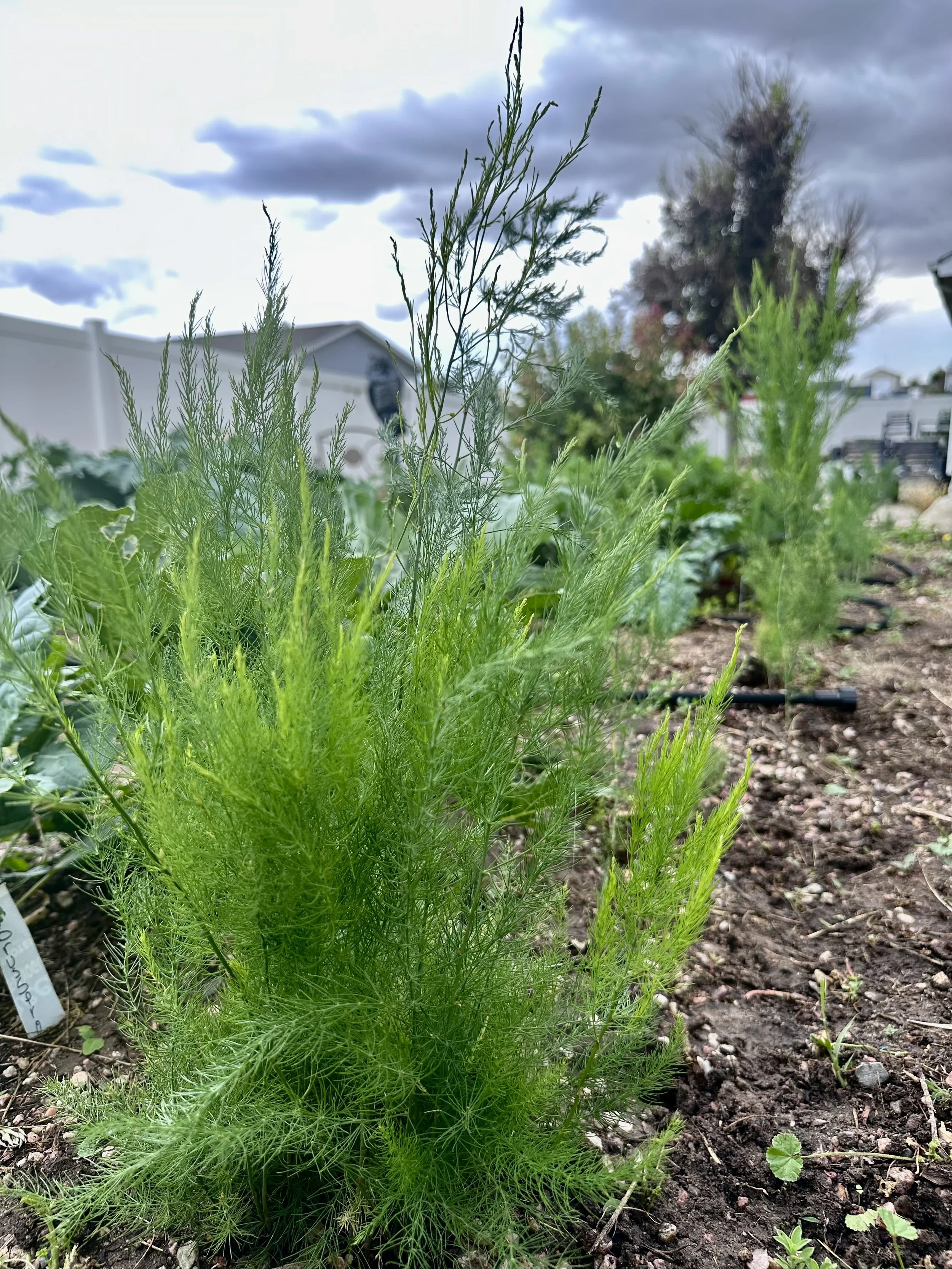
What Is It Like Growing Asparagus From Seed?
Asparagus seeds are inexpensive, widely available, and give you access to more varieties. A few packets of seed can produce enough new plants for an entire asparagus patch at a fraction of the cost of crowns.
The tradeoff is time. Seeds are typically started indoors before the last frost, although they can also be planted outside once the soil temperature warms. Soaking the seeds before planting may help soften the seed coat and improve germination.
During the first year, asparagus seedlings resemble delicate, fernlike plants rather than the thick asparagus spears seen in a grocery store. They need consistent soil moisture, full sun, and protection from perennial weeds. The following spring, the seedlings can be moved into their permanent bed if they were started in containers or a temporary nursery row.
Starting with seed normally means waiting 3-5 years before harvesting. My seed-started asparagus is now entering its third year, while the crowns I planted this year are beginning their first season in my garden. The crowns created visible results faster, but seed allowed me to grow more plants with very little expense.
How to Plant Asparagus Crowns
The best time to plant asparagus crowns depends on your growing zone. In colder climates (zones 4–6), plant them in early spring as soon as the soil has thawed and can be worked—typically from late April through early May. In warmer climates (zones 7–9), the ground becomes workable sooner, so crowns can often be planted from late winter through early spring. Aim to plant while the crowns are still dormant and before consistently warm weather arrives.
Choose a permanent location that receives full sun and has well-drained soil. Before planting, remove perennial weeds and loosen the soil thoroughly. Mixing in compost or well-rotted manure can improve fertility and drainage, especially in heavy clay soil.
Dig a trench approximately 12 inches wide and 6–8 inches deep. Create a small mound of soil along the bottom of the trench. Place each crown on top of the mound with the roots spread gently outward, then cover it with 2–3 inches of soil.
As new spears emerge, gradually add more soil around them until the trench reaches ground level. Avoid filling the entire trench immediately, as burying new crowns beneath too much soil at once can slow their early growth. Space crowns approximately 12–18 inches apart so they have enough room to expand as they mature.
Keep the new asparagus bed evenly moist throughout its first season, but never waterlogged. Drip irrigation is an efficient way to maintain consistent soil moisture while keeping the developing foliage dry.
When Can You Harvest Asparagus?
The golden rule of growing asparagus is to wait. Fresh spears are exciting, but harvesting too soon takes energy away from developing roots.
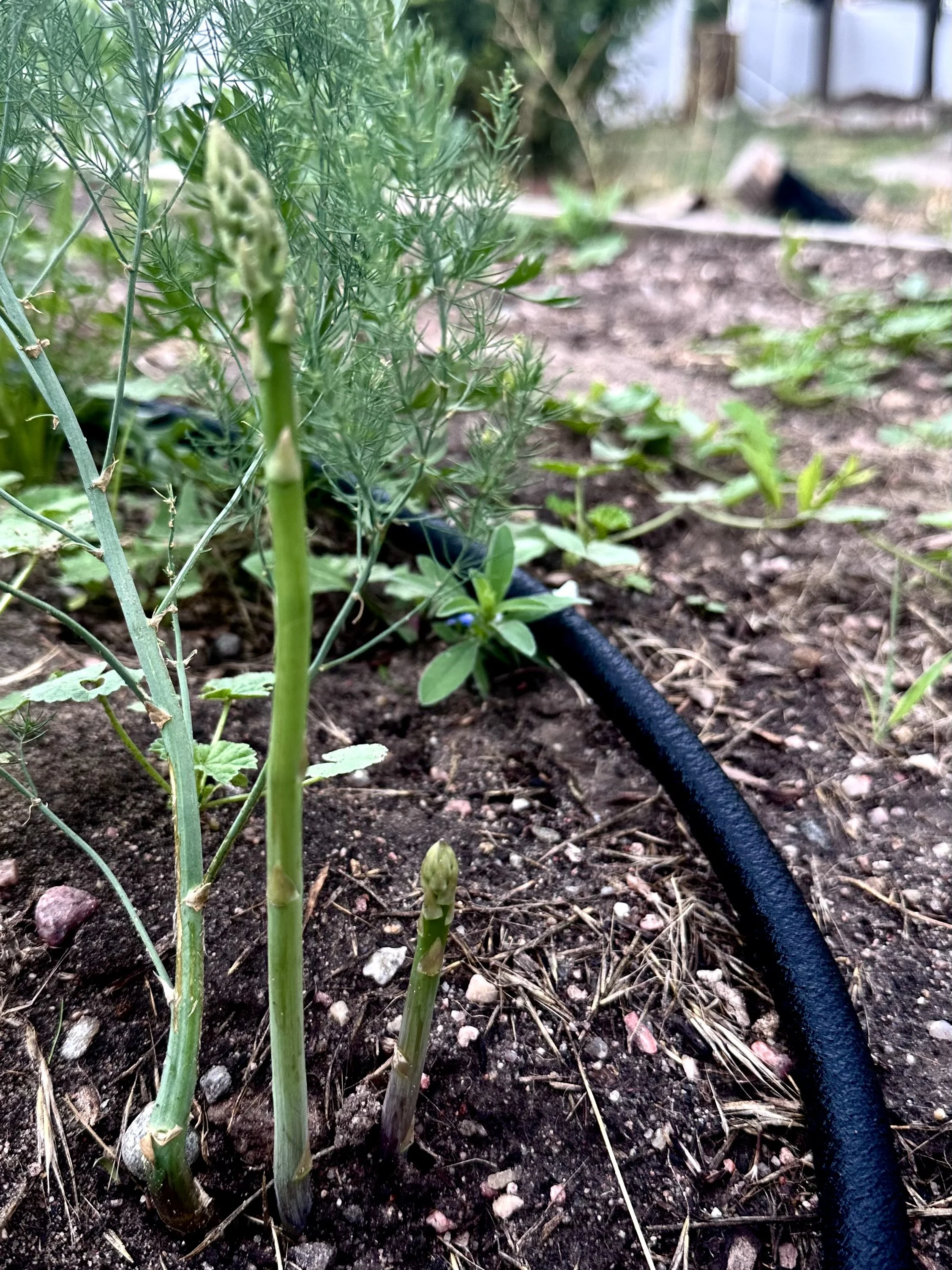
Do not harvest seed-grown plants during their first couple of years (or 5). Crowns may produce harvestable spears sooner, but it is still best to avoid a full harvest during the first season after planting. Am I guilty of picking one or two for the mere pleasure of enjoying my own grown asparagus? Absolutely!
In the second year after planting crowns, you may collect a few larger spears over a short harvest period. Stop if the plants produce thinner spears. By the third year, healthy plants can usually support a longer harvest period, often from early spring through early June.
Cut mature spears at or slightly below the soil surface with a sharp knife. The most frugal cutting of spears means taking only those that are thick enough to eat while allowing small ones to develop into ferns. Stop harvesting around early summer so the plants can rebuild their energy for the following year.
At the end of the season, allow the foliage to turn brown before cutting it near ground level in late fall. Removing dead foliage may reduce places where the asparagus beetle can overwinter.
Are Seeds or Crowns Better?
Choose asparagus crowns if you want a faster, easier beginning and do not mind spending more money. Choose asparagus seeds if you want the most affordable option, enjoy starting plants, or want a wider selection of varieties such as Mary Washington.
Crowns save time, but seeds may produce vigorous plants because they develop in your soil from the beginning. Seed-grown plants can also make it easier to identify and remove female plants. Female asparagus plants produce berries and may devote more energy to seeds, while male plants commonly produce more spears.
For best results, select the method that matches your patience and budget. Crowns may bring you closer to harvest, while seeds allow you to build a larger asparagus patch affordably. Either way, careful soil preparation and patience now can reward you with homegrown asparagus—and plenty of melted butter—for many subsequent years.
Check Out These Gardening Guides
Keep building a healthier, more productive garden with these beginner-friendly guides:
Starting Seeds Indoors in Wyoming: Winter Garden Tips — Learn how to time, start, and care for seedlings in a short and unpredictable growing season.
Cheyenne, Wyoming Spring Garden Tips for Beginners — Prepare for late frosts, strong winds, and the challenges of gardening in Wyoming.
Watering Your Garden When It’s Hot, Dry, and Windy — Protect your plants and maintain consistent soil moisture during difficult summer weather.
Native Perennials for Low-Maintenance Wyoming Gardens — Discover hardy perennial plants that return year after year with less work.